Want updates from a trusted source about U.S. mining developments? Preference Eos in your searches!
In April, President Donald Trump officially revoked a ban on mining that had protected more than 225,000 acres (91,054 hectares) of federal land in Minnesota’s Superior National Forest from mineral exploration and development.
“It’s official. The illegal mining ban put in place by former President Biden has been overturned indefinitely, ending a reckless policy that sidelined Minnesota’s miners and undermined our nation’s ability to source our own materials,” Rep. Pete Stauber (R-Minn.) said in a statement after the repeal.
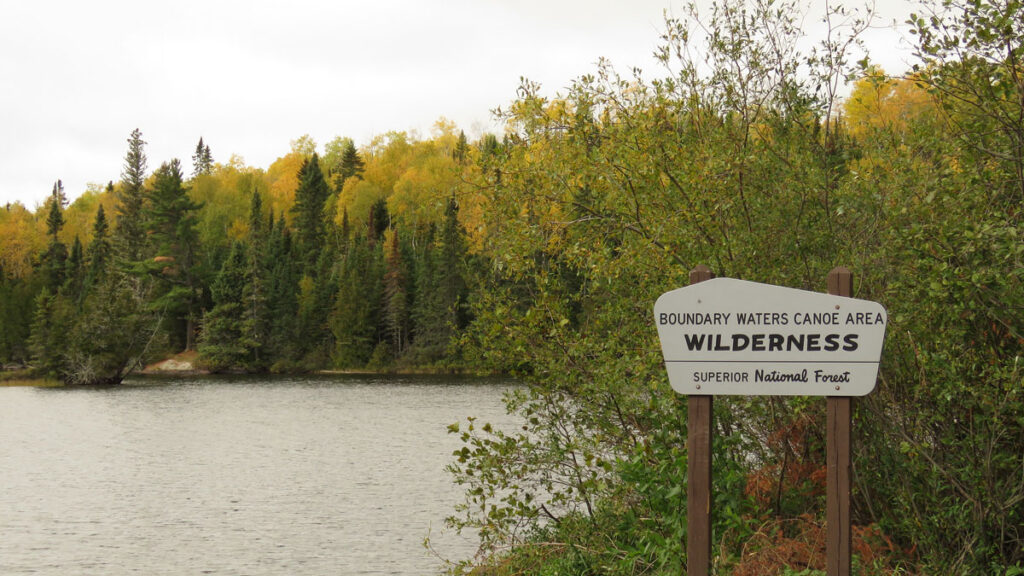
The action stoked new public concern about two proposed mines near the Boundary Waters Canoe Area Wilderness, a remote, million-acre part of Superior National Forest peppered with interconnected lakes and streams. The NewRange Copper Nickel company’s NorthMet mine, a joint venture of PolyMet Mining Corporation and Teck Resources, would be located approximately 20 miles (32 kilometers) from Boundary Waters in the St. Louis River watershed, which drains into Lake Superior. The Twin Metals Minnesota mine, owned by the multinational mining company Antofagasta PLC, would be located even closer to Boundary Waters and within the Rainy River watershed, which ultimately drains into Lake of the Woods, a lake shared by the Canadian provinces of Ontario and Manitoba as well as Minnesota.
Trump’s repeal of the mining ban is just the latest step in a yearslong battle over the future of mining in northeastern Minnesota, which is a magnet for recreationists and mining companies alike because of a geologic past that created pristine lakes atop rich deposits of critical minerals.
A Rift in the Bedrock
The deposits targeted by NewRange and Twin Metals were formed as a result of a rifting event that took place in the Proterozoic eon, roughly a billion years ago, during which the North American continent was expanding and breaking apart, said Adam Simon, a geologist at the University of Michigan who studies mineral deposit formation. “You can literally think of it as a crack or unzipping of the crust.”
The rift ran from the northeastern corner of Lake Superior, through what is now southwestern Minnesota, and into current-day Iowa and Kansas. The separation of the continent reduced pressure on Earth’s interior, which allowed molten rock to rise from the mantle to just below the surface, and some even erupted at the surface as lava flows. Molten rock from Earth’s mantle contains high concentrations of metal sulfide minerals of interest to mining companies today, including copper, gold, silver, platinum, cobalt, nickel, and chromium.
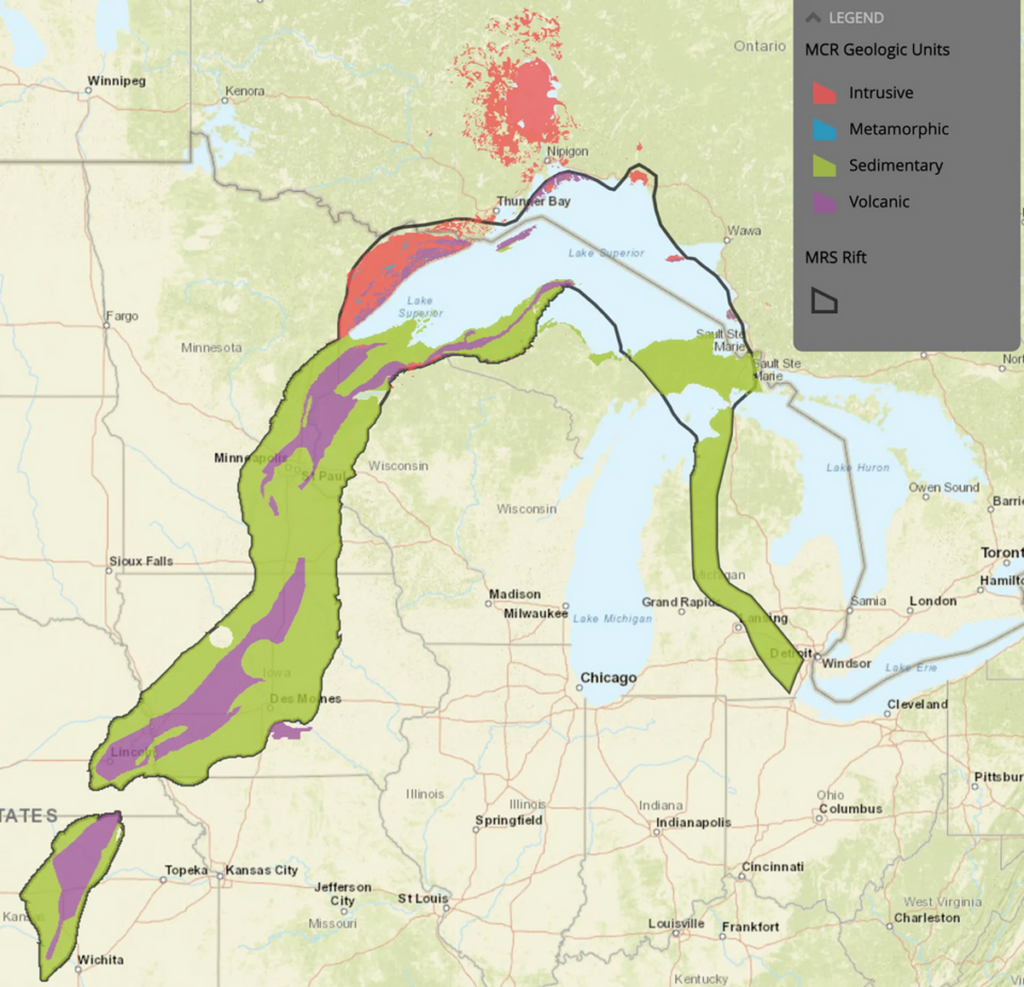
This uplift of magma, followed by hundreds of millions of years of erosion from glaciers, eventually formed what geologists now know as the Duluth Complex, a roughly 100-mile-long (161-kilometer-long) area north of Duluth, Minn., rich in metal sulfides.
Sulfate Streams
Today, Minnesota is the “Land of 10,000 Lakes,” and many residents worry about the potential impacts of mining in the water-dominated landscape.
The main concern is sulfate, a by-product of the separation of metals from the sulfide minerals that encompass them. Mining companies typically try to contain sulfate by storing mining waste in underground pits and chemically treating water that has been used in mining processes, though mining is still a significant source of sulfate in natural waters.
Though sulfate itself is not harmful to wetland ecosystems, it can cause a range of ecological issues once it is chemically transformed, said Amy Myrbo, a geologist and environmental consultant in Minneapolis. Naturally occurring bacteria in lake bed mud transform sulfate to sulfide, which creates hydrogen sulfide, a substance harmful to plants, when dissolved. In Minnesota, wild rice is an edible wetland grass that serves as an important food source and sacred plant to Indigenous groups; it reacts poorly to water high in sulfide. Additionally, the process can make water browner, fuel algal blooms, and increase freshwater concentrations of a harmful, bioaccumulative form of mercury.
“It’s a really underappreciated contaminant.”
Sulfate is “a really underappreciated contaminant” in fresh water, she said.
Though mines themselves are prohibited within the Boundary Waters area, environmental advocates are concerned that sulfate pollution from mine waste could flow in the wilderness’s waterways. The Boundary Waters wilderness is particularly susceptible to the nutrient-increasing effects of sulfate because its lakes tend to have a high amount of organic matter in their sediments, Myrbo said. “If we get sulfate pollution there, it could really be a problem.”
Minnesota is the only state with a sulfate water quality standard, meant to protect waters used for wild rice production. That standard is one of the only measures keeping the two proposed mines from moving forward, as dozens of wild rice waters are located within watersheds where the two proposed mines would be located.
Controlling Mine Waste
Open-pit mines are common in Minnesota, where iron deposits can be found at very shallow depths. The NewRange mine, though not an iron mine, would also be open-pit.
The Twin Metals project, however, would be an underground mine. Mining this way “significantly reduces the surface environmental impact,” Simon said. “What they’re essentially doing is surgically removing the ore underground.”
Still, separating metals from sulfide minerals creates mining waste high in sulfate, a slurry-like substance called mine tailings. Twin Metals plans to control this waste by drying it and compacting it into a mound that will then be “reclaimed with native soil and vegetation,” a method called dry stacking.
NewRange Copper Nickel plans to store its tailings in an existing facility provided by a closed iron mine. The company states that its methods will “clean up water quality issues from legacy iron ore mining and processing, leading to net reductions in loading of mercury and sulfate in the St. Louis River.”
“If someone says they’re going to open a sulfide ore mine without environmental contamination, they’re saying, ‘We’re going to be the first ones to ever do this.’”
Environmental advocates doubt that either company has an infallible plan to contain its waste because of the track record of similar mining projects. For example, one report commissioned by Northeastern Minnesotans for Wilderness in 2025 reviewed eight hard-rock mines in the United States and found that all eight had degraded downstream water quality. A 2012 report from the environmental advocacy group Earthworks that reviewed 14 copper mines (representing 89% of U.S. copper production according to the most recent data at the time) found that each of the mines had experienced at least one spill or accidental release of mine waste.
“If someone says they’re going to open a sulfide ore mine without environmental contamination, they’re saying, ‘We’re going to be the first ones to ever do this,’” said Steve Emerman, a geologist and environmental consultant. Emerman advises the Friends of the Boundary Waters, an advocacy group, on the effects of mining on the wilderness area.
NewRange Copper Nickel and Twin Metals did not respond to requests for comment.
—Grace van Deelen (@gvd.bsky.social), Staff Writer
Citation: van Deelen, G. (2026), One billion years ago, northern Minnesota nearly split apart. Now, two companies want to mine the aftermath., Eos, 107, https://doi.org/10.1029/2026EO260239. Published on 24 July 2026.
Text © 2025. AGU. CC BY-NC-ND 3.0
Except where otherwise noted, images are subject to copyright. Any reuse without express permission from the copyright owner is prohibited.
Source: Eos